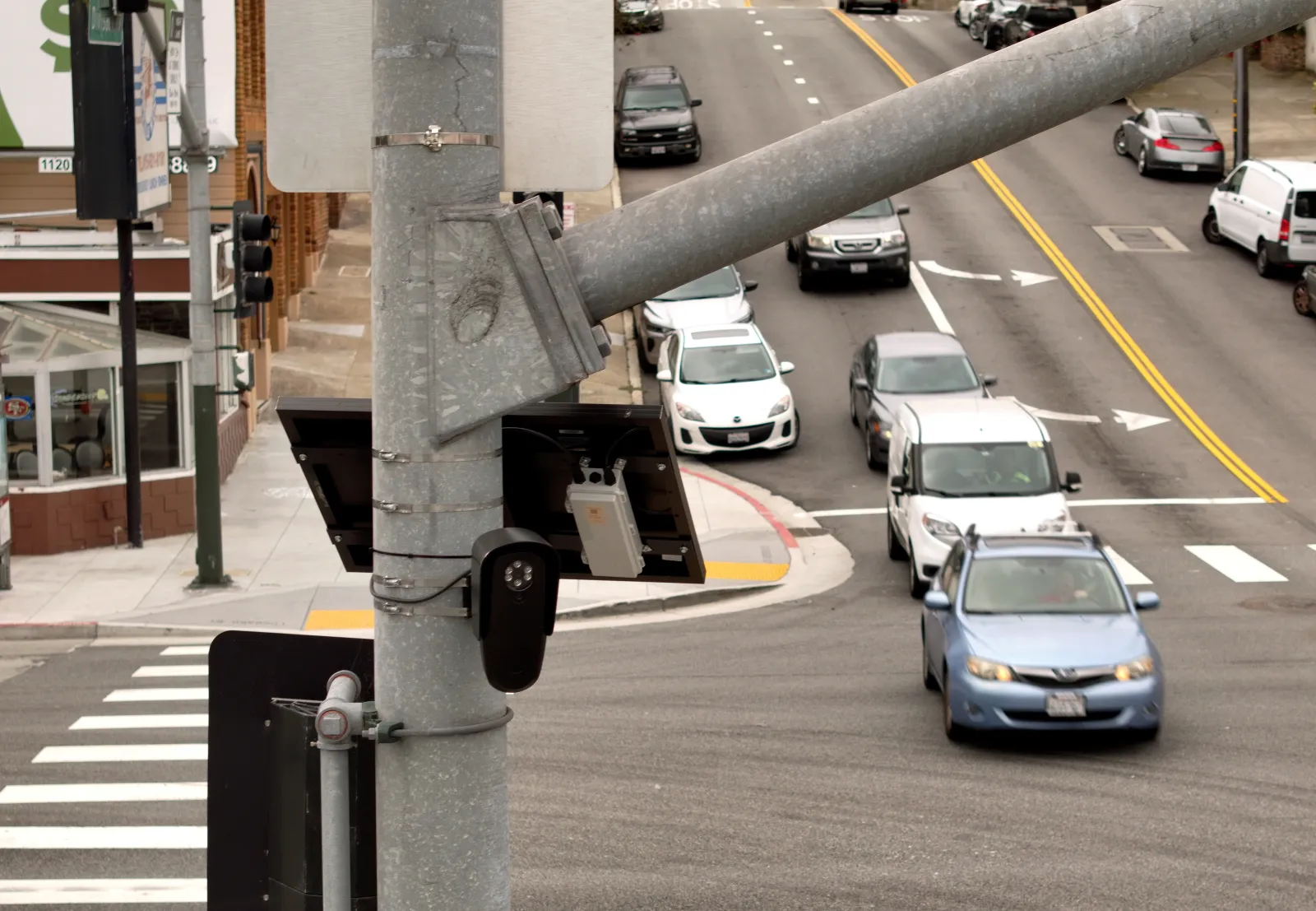
FBI Wants $36 Million to Watch Every Car in America — In Near Real Time
The FBI has posted a $36 million contract solicitation seeking nationwide access to automated license plate reader networks, allowing agents to query vehicle movements across all 50 states and territories in near real time — no warrant required.
The FBI has published a procurement request seeking up to $36 million in funding to purchase commercial, nationwide access to automated license plate reader (ALPR) networks — pulling vehicle movement data “in near real time” from cameras blanketing the United States and its territories.
The contract targets the FBI’s Directorate of Intelligence and would give agents the ability to query a sprawling web of privately operated cameras by license plate number, vehicle make and model, location, and date range. The solicitation covers the lower 48 states (split east and west of the Mississippi), Hawaii, Alaska, Puerto Rico, Guam, the U.S. Virgin Islands, and Tribal territories — at roughly $6 million per geographic region.
What the Contract Would Enable
Under the proposed contract, FBI agents would access a commercial ALPR database as a SaaS platform, searching vehicles across the entire country without needing to contact individual camera operators or local police departments. The winning vendor must cover 75 percent of camera locations and deliver results near-instantaneously.
The capabilities go beyond simple plate lookups. Agents could query by partial plate number, vehicle color, make and model, scan location, and date ranges — cross-referencing data from cameras installed by private companies in neighborhoods, on highways, and at intersections nationwide.
The FBI intends to award the contract to a single vendor, though it may use two. The companies most capable of fulfilling the scope are Flock Safety and Motorola Solutions, which between them operate some of the largest ALPR networks in the country.
Flock’s Response
Flock Safety has publicly maintained that federal data sharing is “disabled by default” on its platform and that local agencies must explicitly opt in before any federal agency can access their cameras. The company stated: “There is no backdoor into Flock. Any access is explicitly permission-based and opt-in.”
That claim is complicated by recent history. Flock previously ran a pilot program granting access to Customs and Border Protection, Homeland Security Investigations, the Secret Service, and the Naval Criminal Investigative Service. In early 2026, the company introduced an administrative toggle allowing local agencies to cut off all federal sharing with a single switch — a safeguard that only exists because federal access had already been normalized.
In March 2026, Flock said it was “defining a new relationship with federal law enforcement” without specifying what that relationship would look like under a formal FBI contract.
State Laws Already Being Violated
California law explicitly prohibits state and local agencies from sharing ALPR data with out-of-state or federal law enforcement. Virginia enacted similar restrictions. Yet a 2024 review found dozens of California agencies were already sharing data in violation of state law.
The FBI’s contract solicitation acknowledges the legal complexity, requiring vendors to disclose server locations to demonstrate compliance with state and local data protection rules.
The Warrant Gap
Nothing in the solicitation requires agents to obtain a warrant before querying the database. Unlike a wiretap or a cell-tower dump, accessing a commercial ALPR database is treated as a third-party records request — meaning courts have generally not required law enforcement to show probable cause before pulling location histories on any vehicle.
Privacy advocates argue that the combination of pervasive private camera networks and warrantless federal access creates a de facto national vehicle tracking system — one that no legislature explicitly authorized and no court has directly ruled on at scale.
What It Means for Flock-Equipped Communities
For residents living in cities and towns that have contracted with Flock Safety, this procurement matters directly. If a local agency has not affirmatively disabled federal sharing — or if the FBI contract goes to a vendor that aggregates data across the Flock network without requiring per-agency opt-in — vehicle movements logged by neighborhood cameras could flow into federal law enforcement databases with no local oversight, no public notice, and no warrant.
The FBI’s $36 million ask is not just a budget line. It is a statement about what kind of surveillance infrastructure the federal government intends to build on top of the private camera networks already embedded in American communities.
Sources
- ars TECHNICA — FBI seeks US-wide access to license plate cameras, wants “data in near real time”
- 404 Media — The FBI Wants to Buy Nationwide Access to License Plate Readers
- Slashdot — FBI Wants to Buy Nationwide Access to License Plate Readers
- Yahoo News — FBI Seeks $36 Million to Buy Nationwide License Plate Surveillance Access
- NPR — Why some cities are canceling Flock license plate reader contracts